
Real Estate Blog -Quadra Island and Campbell River

RSS

Good Strategy for Buyers in Today's Market: How to Find Value and Negotiate a Better Deal

If you're thinking about buying real estate in Campbell River, Quadra Island, or elsewhere on Vancouver Island, you might be wondering whether now is the right time.

The headlines aren't particularly encouraging. Buyers hear that the market is slowing down, prices are coming down, and real estate is becoming increasingly difficult to sell. Naturally, some people assume they should wait until prices drop significantly before making a move.

But here's what I see happening on the ground: today's market offers some genuinely good opportunities for buyers. There are plenty of listings to choose from, some sellers are becoming more flexible, and properties that might have attracted multiple offers a few years ago are now sitting on the market.

The challenge is knowing where to look, how to negotiate, and, most importantly, how to recognize a good deal.

After more than a decade in real estate, including working in Metro Vancouver and now specializing in Campbell River and the Discovery Islands, I've learned that successful buyers don't necessarily buy at the bottom of the market. They buy the right property at the right price, understand what they're getting into, and make sure the purchase makes financial sense. 59 acres for sale on Quadra Island.

Here are some strategies I'd recommend to buyers in today's market.

1. Stop Trying to Time the Market

One of the biggest mistakes I see buyers making is relying too heavily on real estate headlines.

People read that the market is struggling and assume they should be able to purchase a property at a massive discount. While there are certainly overpriced properties and motivated sellers, Vancouver Island is still in relatively good shape compared with markets like Metro Vancouver.

Yes, some properties are overpriced. Some sellers aren't realistic about what their homes are worth, and those properties may sit on the market for months without selling.

But there are also decent deals available. Are we seeing a lot of Foreclosures in our Market?

The important thing to understand is that real estate doesn't behave like the stock market. Prices don't necessarily drop overnight. Even when market conditions change, it takes time for those changes to work their way through actual property sales.

Interest rates are another consideration. Buyers shouldn't build their entire strategy around the expectation that rates will drop soon.

If you're buying a home to live in, trying to predict exactly where the market will be six or twelve months from now can become an unnecessary distraction.

My advice is straightforward: if you have a steady job, your finances are in order, and you can comfortably afford the property, don't let market headlines make the decision for you.

Today's market has an advantage that buyers haven't always had in recent years: choice.

You can look at several properties, make an offer, negotiate, and walk away if the deal doesn't make sense. There will be other opportunities.

2. Remember Who Determines the Sold Price

Who determines the final sold price of a property?

The buyer.

A property is worth what someone is comfortable paying for it on a particular day. Comparable sales, market conditions, improvements, and assessments all help establish a property's potential value, but ultimately, the buyer decides what they're willing to spend.

This is why I don't believe buyers should blindly follow asking prices.

When evaluating a property, I look at recent comparable sales, the property's condition, its location, improvements, and what makes it attractive or unattractive compared with other available options.

However, even recent comparable sales can become outdated in a changing market.

If you're financing your purchase, remember that the bank will likely require an appraisal. Lenders are particularly cautious about risk in uncertain markets. They'll consider comparable sales, property condition, improvements, and other valuation information. BC Assessment figures may also form part of the information they consider, although assessed value is not the same as current market value.

You need to understand that getting an accepted offer doesn't automatically mean the bank will agree with your purchase price.

This is another reason to work with someone who understands the local market and can help you evaluate the property before you make an offer.

3. Look for Value, Not Just a Low Asking Price

There's a difference between buying something cheap and buying something that represents good value.

I often tell buyers to stop looking for the perfect house. There is no such thing.

Almost every property has issues. Houses age, roofs need replacing, maintenance accumulates, and even newer homes require ongoing attention.

Homeownership comes with expenses beyond the mortgage:

  • Property taxes

  • Home insurance

  • Regular maintenance

  • Unexpected repairs

  • Utilities

  • Renovations and improvements

Real estate can be an excellent long-term investment, but it isn't a completely passive investment.

Instead of searching endlessly for a perfect home, I encourage buyers to look at the property's location, features, and potential.

One strategy I particularly like is finding the ugly house in a nice neighborhood.

Perhaps the house needs paint, new flooring, updated fixtures, or some cosmetic improvements. If the location is excellent and the property has good fundamentals, those relatively manageable projects could represent an opportunity.

Today's buyers often prefer move-in-ready properties. That's understandable, but it also means properties requiring some work can be overlooked.

The question is whether the purchase price justifies the work involved.

There is a difference between a property needing some elbow grease and one requiring extensive structural repairs or expensive renovations. You need to understand the costs before deciding whether the opportunity makes sense.

Don't automatically walk away from a property because it isn't pretty. Sometimes the best value is hiding behind outdated wallpaper and an old kitchen.

4. Don't Be Afraid to Negotiate, But Make Your Offer Attractive

In today's market, buyers often have more room to negotiate than they did a few years ago.

However, there's a strategy to making a lower offer.

If you're trying to negotiate a better price, think about the seller's situation. What would make your offer attractive beyond the purchase price?

One of the best things you can do is make the transaction as easy as possible for the seller.

A complicated offer can be a major red flag.

For example, a subject-to-sale clause means the buyer needs to sell their existing property before completing the purchase. From a seller's perspective, that introduces uncertainty. They may have to wait while your home is listed, marketed, and sold, without knowing whether the transaction will actually complete.

This year alone, I've written or received offers involving subject-to-sale clauses where six transactions fell apart. That's a record for me.

If you want to negotiate aggressively, consider making your offer clean and straightforward.

That doesn't mean blindly removing every protective condition. It means preparing properly before submitting your offer.

5. Do Your Due Diligence Before Writing an Offer

This is particularly important when buying properties in rural areas like Quadra Island, Cortes Island, and other parts of the Discovery Islands.

When you write an offer without fully understanding what you're buying, it's much harder to negotiate confidently.

You don't know what potential problems exist, what repairs might cost, or what you're agreeing to take on.

Doing your homework beforehand gives you a much better understanding of the property and allows you to make an informed decision.

Depending on the property, I recommend considering:

  • A professional home inspection

  • Septic system inspection, where applicable

  • Water well inspection, including water quality and quantity testing

  • An insurance quote to confirm the property can be insured on acceptable terms

  • Confirmation of financing with your lender

  • Reviewing permits and available property documentation

  • Understanding access, easements, and other property-specific considerations

On rural properties, the septic system and water supply can be particularly important. These aren't things you want to discover after you've committed to purchasing.

I know that doing inspections before writing an offer isn't the traditional approach, but it can be a very useful strategy.

If you've already completed your due diligence and understand the property's condition, you may be in a position to write a much cleaner offer.

You can potentially offer without inspection or financing conditions because you've already done the necessary work and discussed the risks with the appropriate professionals and your lender.

Of course, every situation is different. Some risks cannot be fully eliminated, and not every property allows for comprehensive inspections beforehand.

The important thing is to understand what you're buying.

My philosophy is simple: if you understand the risks, have investigated them properly, and are comfortable accepting them, there's no reason you can't consider a subject-free offer.

But never remove conditions just to make your offer look better if doing so exposes you to risks you cannot afford.

If the risk is too high, don't buy the property, walk away. 

6. A Lower Offer Can Win If It's Easier for the Seller to Accept

I recently had an interesting experience that illustrates why preparation matters.

My clients were interested in a property, and we did our homework before submitting an offer. We completed the inspections and due diligence so they would have a good understanding of what they were buying.

However, they insisted on including a subject-to-financing condition, just in case they needed an opportunity to walk away.

In the end, another offer came in, and we lost the property in multiple offers.

Looking back, I believe we could have had a better chance of securing the property if our offer had been simpler and easier for the seller to consider.

The inspections had already been completed. We had done the work. The remaining financing concern had been discussed, but the buyers still wanted that extra protection.

I respect that decision because ultimately, it's their money and their choice, But it illustrates an important lesson: preparation gives you negotiating power. If you want to submit an attractive offer, do as much of the work as possible before putting it in front of the seller.

A seller might be willing to accept a lower price if they feel confident the transaction will actually close.

7. Be Flexible: There's No Such Thing as the Perfect House

One of the biggest obstacles I see buyers create for themselves is searching for perfection.

They want the perfect location, perfect layout, perfect kitchen, perfect yard, perfect condition, and the perfect price.

Unfortunately, that combination is rare.

Almost all properties have compromises. The key is understanding which compromises matter and which ones you can live with.

I would rather see buyers purchase a property with an excellent location and some cosmetic issues than pay a premium for a beautifully renovated house in a less desirable location.

Remember, kitchens can be updated. Walls can be painted. Flooring can be replaced.

You cannot easily change the location.

Think about the lifestyle you're buying. Consider the neighbourhood, the surrounding area, access to services, and the features that will matter to you over the long term.

Buy the location and the lifestyle, not just the house.

Also, don't be afraid to look at properties that have been sitting on the market for a while. There may be an opportunity to negotiate with a seller who is becoming increasingly motivated.

Sometimes a property doesn't sell because it's overpriced. Sometimes it simply hasn't found the right buyer.

Your job is to figure out which situation you're dealing with. Here is a list of detached homes for sale for under $600,000 in Campbell River

8. Get Your Financing Ready Before You Start Seriously Looking

If you're serious about buying, get your financing organized early.

A mortgage pre-approval can provide some peace of mind and, depending on the lender and the product, may allow you to lock in an interest rate for approximately three months.

That gives you time to look for a property without constantly worrying about whether rates will change during your search.

Speak with your mortgage professional and make sure you understand:

  • How much you can comfortably afford

  • What your monthly mortgage payments will look like

  • How much money you need for the down payment

  • Whether you qualify for any applicable programs

  • What conditions your lender may require

  • How much money you'll need for closing costs

Don't forget to budget for inspections, legal fees, Property Transfer Tax where applicable, insurance, and moving expenses.

You should also have some money set aside for unexpected repairs and maintenance.

Being approved for a certain mortgage amount doesn't mean you should borrow the maximum.

I always remind my clients not to stretch themselves too far financially. Just because the bank is willing to lend you a certain amount doesn't mean that amount is comfortable for your lifestyle.

You still need to enjoy your life after buying the property.

9. Sometimes the Best Deals Are Brand-New Homes

Here's something buyers might not immediately think about: some of the best opportunities can be brand-new homes that builders haven't managed to sell.

Builders have carrying costs, construction financing, and other expenses. If a completed home remains unsold, they may become more flexible about negotiating.

I've personally negotiated an interesting arrangement with a builder where my buyer was able to move into a newly built home and rent it while the rent payments went toward the down payment.

Think about what that meant for the buyer.

Saving for a down payment is difficult when you're already paying rent somewhere else. In this arrangement, the buyer could live in the new home while building up their down payment rather than spending that money on rent without moving closer to ownership.

It was a creative solution that helped make homeownership possible.

This is the kind of opportunity buyers should be looking for in today's market.

Not every seller will consider unconventional arrangements, and any rent-to-own or rent-credit agreement needs careful legal, financial, and mortgage review. The details matter enormously.

But the bigger lesson is that you don't always have to follow the traditional approach.

When sellers are having difficulty selling, creative negotiations can sometimes open doors that weren't available in a stronger market.

10. Don't Spend Your Entire Life Savings Just to Become a Homeowner

This is probably the most important advice I can give.

Homeownership is great, but it isn't worth sacrificing your financial security or your family's quality of life.

I've seen buyers spend nearly all their money purchasing a property, only to spend years renovating it.

They end up working on the house every weekend, spending their savings on materials and contractors, and sacrificing quality time with their children.

Is that the lifestyle you want?

Is the house worth that sacrifice?

I always approach my clients' purchases as if they were members of my own family.

I ask myself: Would I help my brother buy this property? Would I be comfortable if my sister made this deal?

If I wouldn't want my own family taking on that financial burden, why would I encourage a client to do it?

Sometimes the best decision is to walk away.

There is absolutely nothing wrong with renting for a little longer if your financial situation isn't ready for homeownership.

Real estate is generally a long-term investment. We don't know exactly what prices will do over the next year or two. They could continue declining, and buyers need to understand the possibility of negative equity when renewing their mortgages.

Never assume property prices will always go up. That's not guaranteed.

Buyers need a proper financial plan, enough money for ongoing expenses, and the ability to handle unexpected costs.

A great purchase should improve your life, not make you lose sleep at night.

11. You Make Money When You Buy, Not When You Sell

There's an old saying in real estate: you make money when you buy, not when you sell.

What does that mean?

It means your purchase price and the value you receive are incredibly important.

You cannot control what the market will do five years from now. You cannot guarantee that interest rates will be lower, or that property prices will increase by a certain percentage.

But you can control what you pay today.

You can research the market, negotiate, identify overlooked properties, and avoid paying too much for something simply because you like it.

Look for properties with good fundamentals:

  • Desirable locations

  • Functional layouts

  • Features that future buyers will appreciate

  • Potential for improvements

  • Reasonable maintenance requirements

  • A purchase price that makes sense

Maybe it's a property that's been sitting on the market for six months. Maybe it's a house that needs some renovation work. Maybe it's a brand-new home that a builder needs to sell.

The opportunities are out there.

You just need to know how to recognize them.

My Final Advice to Buyers in Today's Market

If I had to summarize my strategy for buying real estate today, it would be this:

Don't wait for the perfect market. Don't obsess over headlines. Don't expect every property to sell at a massive discount.

Instead, get your financing organized, understand your budget, and start looking at properties.

Be flexible. Look beyond cosmetic imperfections. Consider properties that have been sitting on the market. Don't be afraid to negotiate, and always do your homework before committing to a purchase.

Most importantly, buy within your means.

Today's market offers buyers something they haven't had much of in recent years: more choice, more time to think, and potentially more negotiating power.

Use that opportunity wisely.

And remember, you don't need to buy a house just because you can. You should buy because the property, the price, and your financial situation make sense.

If you're thinking about buying in Campbell River, Quadra Island, Cortes Island, or the surrounding Discovery Islands, I'd be happy to help you understand the local market and identify opportunities. How to find a trustworthy Real Estate Agent in Campbell River.

I'm not here to push you into buying something. My job is to help you make a good decision, even if that decision is to wait.

Because at the end of the day, I want you to be happy with your purchase years from now, not just excited about getting the keys.

Read

Quadra Island vs Campbell River: Real Estate, Lifestyle, and the Realities of Moving

Deciding between Campbell River and Quadra Island is one of the most frequent conversations I have with buyers looking in our region. While they sit just a 15-minute ferry ride apart across Discovery Passage, the living experience and real estate considerations in these two communities could not be more different. Choosing the right fit comes down to understanding the trade-offs in lifestyle, property maintenance, holding costs, and daily logistics.

Property Taxes and the True Cost of Quadra Land

Quadra Island has historically been known for lower property tax rates compared to urban centers on Vancouver Island, making it an attractive option for buyers seeking larger acreage without hefty annual tax bills. However, regional holding costs are evolving.

A recent regional referendum determined that Quadra Island properties will now contribute to the debt and operation of the Strathcona Gardens recreation complex in Campbell River. For Quadra property owners, this decision adds roughly $500 per year to local property taxes.

Even with that tax increase, the core value proposition of Quadra Island remains intact. Buyers choose Quadra because it offers larger land parcels, open space, a tight-knit small-town feel, zero traffic, and an environment entirely wrapped by the ocean. It provides a rural coastal lifestyle that is increasingly difficult to find elsewhere on Vancouver Island.

The Rural Reality: Wells, Septic, and Acreage Maintenance

The vast majority of Quadra Island properties are one acre or larger. While a spacious lot offers privacy and freedom, it also demands hands-on ownership and ongoing rural system maintenance. Top 10 Questions Every Quadra Island Buyer Must Ask Before Making An Offer in 2026

Water and Well Testing

Properties on Quadra rely on private drilled wells, where water levels fluctuate seasonally. One of the most critical steps during the subject removal process is conducting a professional well flow test. Ensuring a property has adequate, reliable water flow year-round protects your investment and ensures daily livability. 

Septic Systems and Land Care

Unlike Campbell River, where municipal sewer and water services are standard, Quadra owners manage their own septic systems. Between septic upkeep, lawn care, and land maintenance, keeping up with a large lot requires time, energy, and physical labor.

For buyers who want space to garden, build chicken coops, or enjoy total privacy, this extra work is a welcome trade-off. However, for buyers dealing with health issues, mobility challenges, or a desire to downsize their responsibilities, the maintenance demands of an acre on Quadra can quickly become overwhelming.
Pre-inspection guide for septics and water wells.

Convenience and the Ferry Trade-off

The biggest factor influencing whether people stay on Quadra or move across the water comes down to the ferry.

When working with clients who choose to sell their Quadra homes and relocate to Campbell River, the single most common relief they express is no longer having to manage their lives around a ferry schedule. While the short crossing is straightforward, relying on it daily for appointments, shopping, or work requires constant planning.

Campbell River offers distinct advantages in daily convenience:

  • Immediate access to the local hospital and healthcare providers

  • Proximity to major grocery stores and retail shops

  • Municipal utility connections and low-maintenance yards

  • No dependence on ferry sailings or weather delays

Lifestyle Match: Who Belongs Where?

Matching a buyer to the right side of Discovery Passage depends entirely on what you want your everyday routine to look like.

Choose Quadra Island If:

  • You want a deep connection to nature, extensive hiking trails, and endless ocean access right outside your door.

  • You love the charm of small-community landmarks like gathering at the historic Heriot Bay Inn for a meal by the water.

  • You want privacy, space for livestock or gardens, and an authentic rural lifestyle.

Choose Campbell River If:

  • You prioritize easy access to healthcare, schools, and city amenities.

  • You want a modern home with minimal lawn and property maintenance.

  • You want to eliminate ferry schedules and commute friction from your daily life.

Both communities offer an incredible coastal lifestyle, but they cater to very different priorities. Working with a local expert who understands well testing, regional tax changes, and neighborhood nuances ensures you make the right move for your long-term goals.

Search properties with my Ai Assistant 

Search properties on my regular website

Read

Are We Seeing a Lot of Foreclosures in Our Market?

The short answer is no, not yet. But the numbers are starting to move, and I think it’s worth paying attention to.

What I’m Seeing on Vancouver Island

Every so often I check how many court ordered sales are listed on Vancouver Island. From what I remember, the number is usually fewer than five. When I checked again today, there were 13 active listings.

Thirteen doesn’t sound like a lot, and in the grand scheme of things it isn’t. Our market is still performing well. But going from fewer than five to 13 tells me something is shifting, even if it’s early. Here is a list of current Court Ordered Sale Listings. as of October 18, 2026. 

It’s also worth knowing that not every court ordered sale is a foreclosure. Some are the result of divorces or other legal situations. So the number isn’t a perfect measure of financial distress, but it’s still a useful signal to watch.

Why Our Market Is Lagging Behind Other Parts of BC

Other cities across BC have shown more foreclosures than we have. Interest rates have gone up significantly over the last few years, and I believe we may be in the early stages of financial struggles for some owners. Our market tends to be delayed compared to others, and so far it’s holding together well.

That delay doesn’t mean we’re immune. It may simply mean we’re further back in the line.

A Foreclosure Is Not Always the Bargain People Think It Is

Earlier this year, I had a client who wanted to buy a foreclosure listing. We wrote an offer and went to court. Our offer was rejected because several other people were bidding on the property, and ours was one of the lowest.

That experience reinforced something I tell buyers often. Foreclosures can look like a chance to buy at a lower price, but that’s usually not how it plays out. In reality, it’s closer to a multiple offer situation.

Advice for Buyers Hoping to Find a Deal

If you’re interested in buying a court ordered sale, go in with a plan.

  • Write one low offer, but be ready to write a higher one. Have your best offer ready.

  • Don’t get swept up in the excitement of multiple offers. Stay disciplined and know your number before you walk in.

  • Remember that foreclosures can’t have any subjects. You are buying the property as is.

  • Understand that the courts can’t guarantee all appliances will still be there when you take possession, and you don’t really know if the home will look the way it did during your initial viewing.

  • Be prepared for potential extra costs, because there are a lot of unknowns.

Advice for Homeowners Who Are Worried

If you’re struggling with your payments, the hardest thing is also the most important: make the difficult decisions early. Don’t wait until the bank takes over.

  • Call your bank as soon as you see trouble coming, whether it’s a job loss or any other change in income, and try to work out a repayment plan.

  • If that doesn’t work, consider selling your home as soon as possible and moving on.

  • Don’t bury your head in the sand. Avoiding the problem will cost you far more than money. It means months of stress and years of recovery.

Selling on your own terms is almost always a better outcome than losing the home. It’s not worth the damage to your finances or your well-being.

Why I Think We’ll See More Foreclosures in the Next Few Years

I expect we’ll see more foreclosures in the coming years. Nobody has a crystal ball, especially in a political and economic climate that keeps changing, but several things point in that direction.

Affordability across the country has been out of reach for a lot of people, especially younger buyers. As interest rates have gone up, prices should come down. If they don’t, we will likely see more renters in the future. Governments also appear to be promoting rental development more than home ownership, so I wouldn’t be surprised if ownership becomes something reserved for a few.

Add to that rising property taxes and baby boomers retiring and downsizing, and we could see much more inventory with fewer qualified buyers to absorb it.

The Hidden Risk Behind Pre-Construction Condos

One scenario concerns me in particular. I’ve heard from people in the mortgage industry that many older homeowners took out lines of credit against their houses to help their kids with a down payment on a new condo.

Now those condos are being completed, and the financing has to be finalized. But condo prices have come down, and a lot of buyers don’t qualify for the mortgage they need. Here’s what can happen next:

  • The buyers walk away and forfeit their deposits.

  • The parents are left with debt on their homes.

  • The kids can’t qualify for financing.

  • Developers may sue for loss of sale.

If enough of this happens at once, it could blow up in a big way.

The Bottom Line

For now, our market seems to be holding together, and it’s a great time to be a buyer. If you’re sitting on some cash, write offers. Don’t get attached to the outcome. Write low offers, stay disciplined, and you might get lucky.
How to find trustworthy real estate agent in Campbell River

If you’re a homeowner feeling the pressure, act early. Your options are always better before the bank is making the decisions for you.

find more MLS Listings in Campbell River with my new Ai assistant:
https://heyleo.com/roman

Read

New property listed in Isl Quadra Island, Islands

I have listed a new property at in Heriot Bay. See details here

59 Acres on Quadra Island. Parcels this size don't come along often on Quadra. This one sits between two protected park lands, each with a small creek that runs down to the ocean just a short way off. Mossy bluffs, open sunny meadows, and a mix of mature trees and shrubs make it a natural haven for local wildlife. Offering privacy, surrounded by crown land on 3 sides, with no visible neighbours. The land once held a gravel pit that supplied material for roads and driveways around the neighbourhood. It has since been fully reclaimed, and the permit has been closed. You're a few minutes' walk from beach access, with excellent hiking trails right on your doorstep. The property offers plenty of good building sites, a few with ocean and mountain views. Zoning permits 5 single family dwellings plus accessory buildings which makes this a great fit for a family looking to build together or hold as an investment. It could also be subdivided, or simply kept whole. (please verify with SRD) What's already in place: Power at the lot line A poured foundation (16' x 35') ready for a workshop A couple of outbuildings for storage A water reservoir suitable for garden use, or for drinking once filtered A cistern on site The owner currently lives here off-grid in an RV, which shows how comfortably the land can be lived on while you plan your build. If you've been dreaming of rural island living with a real sense of community, this is a rare chance to make it happen.

Read

How to Find a Trustworthy Real Estate Agent in Campbell River

Buying or selling a home is one of the biggest financial decisions most people will ever make, and yet a lot of buyers and sellers spend more time researching a new washing machine than they do vetting the person who's going to represent them in a six or seven-figure transaction. I've been a residential real estate agent since 2014, starting my career in Vancouver before moving to Campbell River and Quadra Island in 2019, and that shift taught me a lot about what "trustworthy" actually looks like in a smaller market versus a big city. 
Do I Really Need A Real Estate Agent?

The good news is that most agents in this area are genuinely professional. But I'd be lying if I said I hadn't come across some questionable behaviour over the years, and I think it's worth talking about honestly so you know what to watch for. What Should You Expect From Your Real Estate Agent? 

The Local Market Is Different Than You Think

One thing people moving here from bigger cities don't always expect is how much local knowledge actually matters in Campbell River and especially on Quadra Island. A huge number of properties here run on water wells and septic systems, which is something you almost never deal with in a big city market like Vancouver. These aren't small details.

Older septic systems, particularly on waterfront properties, can run into serious problems with newer setback regulations. A system that was perfectly legal when it was installed may not meet current requirements, and that can affect what you're allowed to build, renovate, or even how the property is valued. This isn't something every agent has hands-on experience with. I've personally sat through a lot of these inspections over the years, and honestly, I still learn something new almost every time. An agent who hasn't spent real time with well and septic properties simply won't know what questions to ask, and that's the kind of gap that can cost you tens of thousands of dollars down the road.

If you're buying or selling anything with a well or septic system, ask your agent directly how many of these transactions they've handled and what kind of inspections they typically recommend. Their answer will tell you a lot.

Watch for Dual Agency Conflicts

Dual agency, where one agent or brokerage represents both the buyer and the seller in the same deal, is NOT legal here, and it creates a conflict of interest that not every agent handles well. When one person is technically supposed to advocate for both sides, someone's interests are going to get less attention, even if the agent has good intentions. Always ask who the agent works for. 

I've seen situations where this wasn't handled transparently, and it put one side of the deal at a real disadvantage. If your agent brings you a property that they or someone at their brokerage also represents on the seller's side, ask exactly how that conflict is going to be managed and who is really looking out for you. A trustworthy agent will explain this clearly upfront instead of glossing over it.

Full Disclosure of Defects Isn't Optional

This one should go without saying, but I've encountered cases where known issues with a property weren't disclosed properly. Whether it's water damage, foundation problems, or an aging septic field, sellers and their agents have a responsibility to disclose known material defects. When that doesn't happen, it's the buyer who ends up paying the price, sometimes literally, months or years later.

If you're buying, don't just take the listing at face value. Ask pointed questions, get proper inspections, and pay attention if your agent seems hesitant to dig into the property's history.

How to Actually Vet an Agent Before You Hire One

Here's what I tell friends and family when they ask me how to pick an agent, whether they're buying their first place or selling a home they've owned for twenty years.

Are they too busy for you? A good agent is busy because they're good at their job, but there's a difference between busy and unavailable. If it takes days to get a response before you've even hired them, that's exactly how it's going to feel once you're under contract with deadlines.

Who's actually going to handle your file? Some agents work solo. Others have a team of assistants or partner agents who do a lot of the actual legwork. There's nothing wrong with either approach, but you should know upfront who you'll actually be dealing with day to day, so there are no surprises later.

Check their online reviews. Past clients will tell you things an agent never will about themselves. Look for patterns, not just star ratings. If multiple people mention poor communication or feeling pressured, take that seriously. My reviews 

Pay attention to trust from the very first conversation. Real estate is a people business, plain and simple. If you don't feel a sense of trust fairly early on, that's worth paying attention to. It doesn't need to be instant best-friend chemistry, but if something feels off in those first conversations, it usually doesn't get better once you're deep into a transaction.

The Ego Problem

I'll be honest about something that bothers me in this industry: there are agents out there with big egos who don't return calls promptly and who make deals more difficult than they need to be. I've dealt with agents on the other side of a transaction who were genuinely unpleasant to work with, and it made the whole process harder for everyone involved, including their own clients.

Here's my take on it. This isn't a popularity contest, and nobody needs their agent to be their best friend. But it's also not brain surgery. At the end of the day, we're matching buyers with sellers. That's the job. I always aim to have both sides walk away from closing feeling like the deal was handled fairly and professionally. An agent who treats every negotiation like a battle to win, rather than a deal to close well for everyone, is usually more interested in their own ego than in getting you the best outcome.

What This Means for You

If you're looking for an agent in Campbell River or on Quadra Island, don't just go with whoever has the most yard signs around town. Ask about their experience with local property types, especially anything involving wells or septic systems. Ask direct questions about how they handle conflicts of interest. Check their reviews. And pay attention to how they make you feel in those very first conversations, because that's usually a pretty accurate preview of what working together is actually going to be like.

Most agents here do good, honest work. But knowing what to look for, and what to be cautious about, puts you in a much stronger position either way. How Much Does A Real Estate Agent Cost?

https://www.romankrzaczek.ca/
https://heyleo.com/roman
how to find me? my office

Read

I have sold a property at 241 Alder St S in Campbell River

I have sold a property at 241 Alder St S in Campbell River on Sep 18, 2026. See details here

Panoramic ocean views set the stage for this beautifully updated West Coast Contemporary family home, complete with a brand-new, spacious two-tiered deck. Unique multi-level layout offers both togetherness and privacy, featuring 4 bedrooms thoughtfully spread throughout the home, complete with a den. Extensive 2021 updates provide peace of mind; new siding, windows, doors, sundecks, and a new metal roof, along w/ refreshed flooring, drywall, paint, and fixtures inside. Upper level hosts a bright and airy primary retreat w/ stunning ocean views, private balcony, and convenient en-suite, alongside two additional bedrooms and a full bathroom. 4th bedroom on the lower level offers flexibility for guests, teens, or a home office. The partially finished lower floor is full of potential—create the perfect rec room, play space, gym, or studio, w/ French doors opening to a covered patio and backyard where more ocean views are enjoyed. Schools, recreation, shopping, are all within a few blocks!

Read

I have sold a property at #30 2520 Quinsam Rd in Campbell River

I have sold a property at #30 2520 Quinsam Rd in Campbell River on Sep 2, 2026. See details here

Located in a quiet park just minutes from town, this nicely renovated 2-bedroom, 1-bathroom mobile home offers comfortable, easy living in a convenient setting. Thoughtful updates throughout give the home a fresh, welcoming feel, featuring a bright living area, attractive granite countertops in the kitchen, and a functional layout that makes the most of the space. Enjoy a covered porch, perfect for relaxing outdoors in any season. Step beyond to a larger-than-average yard for park living, offering great space for gardening, unwinding, or simply having that extra bit of outdoor room to enjoy. Set in a peaceful location close to shopping, amenities, and recreation, this home is a great option for those looking to enter the market, downsize, or enjoy a low-maintenance lifestyle.

Read

Open House. Open House on Saturday, July 18, 2026 2:00PM - 4:00PM

Please visit our Open House at 360 Cape Mudge Rd in Quadra Island. See details here

Open House on Saturday, July 18, 2026 2:00PM - 4:00PM

5 ACRES, 2 DWELLINGS Discover this sunny, private and flat property, just a short drive from the ferry and essential services in Quathiaski Cove. The charming, updated 3bed, 2 bath, bright home offers a lot of value for rural living. Rural 1 zoning allows for two dwellings, Nurseries, greenhouses, Silviculture. The second dwelling 3bed, 1bath, has a separate driveway, detached garage and offers privacy. This dwelling could be a rental or a multi generational living opportunity. Are you looking for tranquility? a small farm? privacy? This might be the one!

Read

How Long Does It Realistically Take to Sell a House in Today’s Market?

When homeowners decide to put their property on the market, the very first question they usually ask is: "How long is this going to take?" Do I Need a Real Estate Agent?

The honest answer is that selling a house isn’t a single event—it is a timeline made up of moving parts. Many sellers look only at the days a home spends actively listed on the market, but that is just one piece of the puzzle. In reality, the true timeline depends heavily on your preparation, the current economic climate, and the underlying math of the closing process.

To understand how long it will take to sell your home, you have to look at the entire journey, from the moment you decide to sell to the day the keys change hands.

The Overlooked Phase: Pre-Listing and Preparation

The timeline of a successful sale begins long before the "For Sale" sign goes up in the yard. The pre-listing phase is often the most overlooked variable, yet it has the greatest impact on how quickly the rest of the process moves.

When estimating your timeline, you must first ask yourself several critical questions:

  • Is the property truly ready to be showcased, or are there unfinished DIY projects lingering?

  • What is the time of year, and how will seasonal buyer behavior affect your launch?

  • What are the broader market conditions right now?

  • Pre-listing checklist.

A few years ago, a client called me well in advance of their target moving date. Instead of giving me rigid instructions on how they wanted the sale to happen, they asked for strategic advice. Because we had time on our side, we walked through the home and anticipated the exact issues a buyer’s inspector might flag. We logically decided which repairs were worth fixing ahead of time and which ones could be left alone.

The client had ample time to clean up the property, finish the necessary projects, and wait for beautiful, sunny days to capture our marketing photos. Because we were proactive, the home sold seamlessly with zero unpleasant surprises. When you rush the preparation phase, you almost always pay for it with extra days or weeks sitting idly on the market.

Pricing in a Buyer's Market vs. a Seller's Market

My primary goal is always to sell a property for the highest possible price in the shortest amount of time. Achieving this requires recognizing that pricing is an art form, and the strategy changes entirely depending on who holds the leverage.

In a seller’s market, inventory is low and buyer demand is high. Sellers have the upper hand, meaning you can afford to list your property a bit higher because you have the cushion to come down if necessary.

Today’s real estate environment is firmly a buyer’s market in some areas. Locally, not technically in a buyers market but we are heavily dependent on other markets since our market attracts a lot of buyers from other areas such as Vancouver, Victoria, Nanaimo or out of province. The potential buyers need to sell their existing homes first in the big city before they can move here. 
We are facing a high volume of active inventory, which means your neighbors aren't just your neighbors—they are your direct competition. Buyers have choices, leverage, and the freedom to write lowball offers or simply keep walking. If a property is not priced correctly from day one, buyers will not even bother to look. To avoid disappointment and an agonizingly long sales timeline, you must price the home as close to true market value as possible.

Troubleshooting a Stale Listing: The 2-to-3 Weekend Rule

Today’s buyers are looking for immediate value. Very few people want to take on a property that requires major renovations, as construction is both time-consuming and incredibly expensive. Buyers want move-in ready homes.

If you decide to test the market by listing at a higher price, you must establish a strict troubleshooting strategy with your agent from the very beginning. You cannot count on the old method of "let's list it and see what happens." In a buyer's market, that approach stalls listings completely.

The first two to three weekends of a new listing are your golden window. If you receive zero showings or zero serious interest during those first few weeks, it is a clear indicator of a pricing issue. Buyers simply will not view a property that looks uninteresting or overpriced compared to the competition.

If you hit the one-month mark with no momentum, the solution is not a minor adjustment. To inject life back into a stale listing and make it more appealing than the competing inventory, you must be prepared to make a drastic price reduction of 10% to 15%.

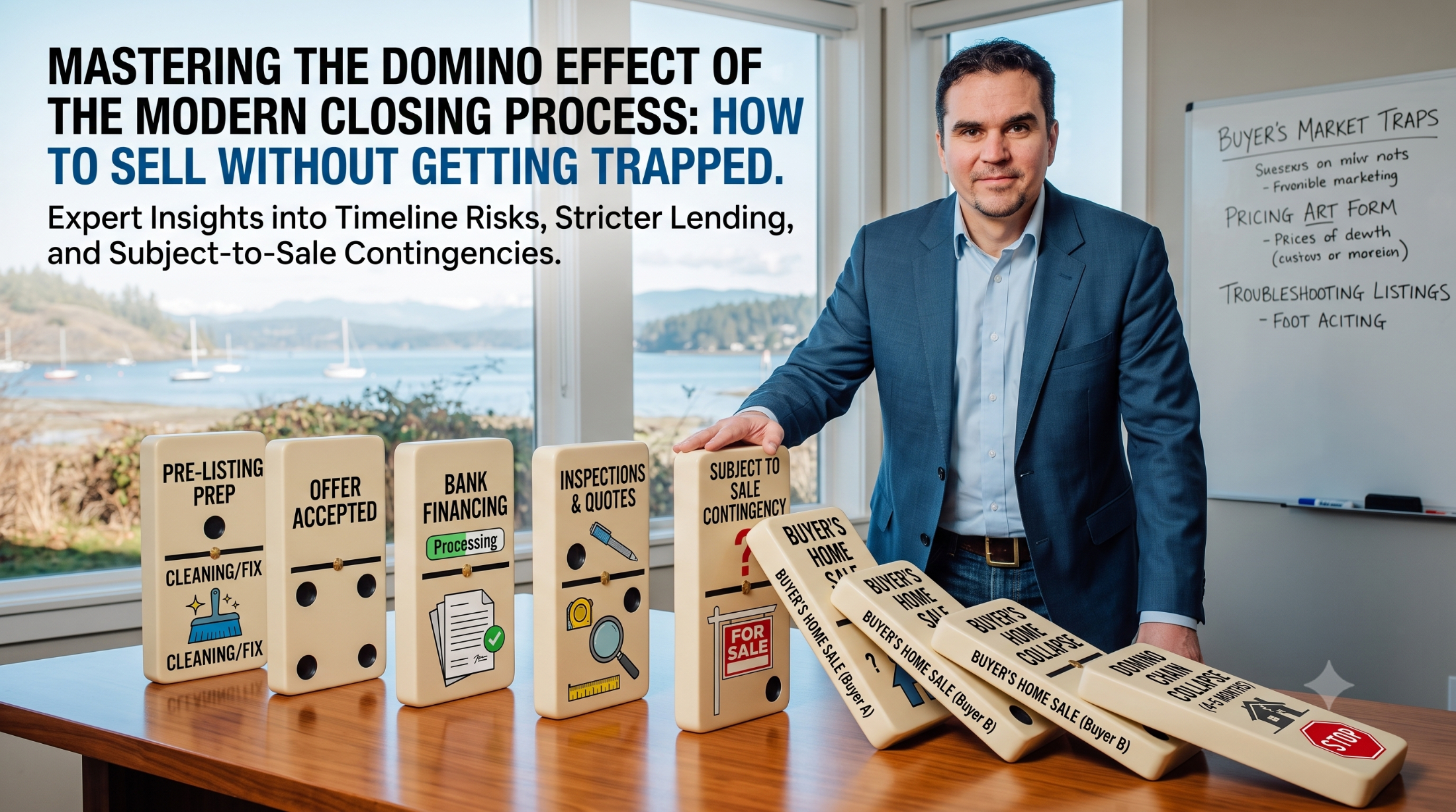
The Domino Effect of the Modern Closing Process

Once you finally accept an offer, many sellers assume they are at the finish line. However, the closing process in today's environment requires a realistic, conservative budget of time.

While a standard closing process traditionally takes two to three months, today’s market demands that you prepare for four to five months. There are two distinct reasons for this slowdown:

Stricter Institutional Lending

Banks and financial institutions have become significantly more demanding. They are slower at processing paperwork, they require highly detailed appraisals, and underwriters are asking for more historical information before clearing a loan. These financing delays, combined with the time it takes to get contractor quotes during the inspection objection phase, naturally stretch out the timeline.

The Rise of Contingent Offers

The biggest timeline disruptor right now is the "subject to sale" condition. Because the market has slowed down, a massive portion of active buyers cannot finalize the purchase of your home until they sell their existing property.

This creates a high-stakes domino effect. If your buyer fails to sell their home on time, your deal collapses. So far this year alone, I have had five written and accepted offers completely fall apart and collapse because the buyers could not sell their own properties in time. When a chain of multiple buyers all need to sell their respective homes to fund the next purchase, a single delay triggers a cascade that affects everyone involved. What Should I Expect From My Agent?

Setting Your Expectations for Success

Selling a home efficiently in today's real estate climate requires shedding outdated assumptions. You cannot control the broader market conditions or the speed of commercial banks, but you can control your own preparation and pricing strategy.

By handling repairs before the cameras arrive, pricing accurately for the current inventory, and budgeting a realistic four to five months for the closing dominoes to fall, you can navigate the timeline with confidence and avoid the traps that leave listings sitting in the dark. 

If you’re looking for an agent that will get the job done, I’d be happy to help: https://www.romankrzaczek.ca/

Read

What Questions Should I Ask My Real Estate Agent?

Choosing a real estate agent is one of the most important decisions you will make when buying or selling a home. I have been a real estate agent since 2014, initially working in the fast-paced Vancouver market before moving to Quadra Island in 2020. I now proudly serve Campbell River and specifically Quadra Island, British Columbia. Do I really Need a Real Estate Agent?

Over the years, I have learned that real estate is not just about properties; it is about people. It is a relationship built entirely on trust, and that trust has to go both ways. Unfortunately, there is still a lingering stigma that real estate agents are just out to take advantage of people. While my intentions are always strictly professional and I have a fiduciary duty to do what is best for my clients, the reality is that the public doesn't always understand how deeply a good agent cares.

To help you cut through the noise and find someone who will truly champion your best interests, here are the vital questions you need to ask before hiring an agent. What Should You Expect from Your Real Estate Agent.

Can You Provide Specific References and Examples of How You Help Clients?

Do not just ask an agent how long they have been in the business. Ask them to prove their value through the experiences of their past clients. You should ask for references and point-blank request specific examples of what they did to help others in situations similar to yours. 

I work frequently with elderly clients who are navigating incredibly difficult life transitions. For instance, I often help widows who are trying to figure out their next steps after losing their husband. In these situations, I step in as a guide, acting much like a close family member would. You need to know if the agent you are interviewing has the patience required to guide you through stressful times. A quick look at their Google reviews or a conversation with a past client will tell you if they actually walk the walk.

Are You a High-Volume Agent, or Will You Take the Time to Listen?

You need to know if you are just another number on a whiteboard, or if you are going to receive personalized care. Ask the agent if they are transaction-based or relationship-based.

A high-volume agent might simply pass you off to their assistants or rush you through the process. A dedicated, relationship-focused agent will spend the time to visit with you, sit down, and genuinely listen to your needs. They will treat you like a friend or family member, prioritizing your well-being over a quick commission check.

Will You Patiently Explain All the Forms and Processes?

Real estate transactions are dense with legal jargon, contracts, and strict timelines. If you are not an expert in the field, it is easy to feel overwhelmed.

Ask your prospective agent if they are willing to sit down and explain every single form and process to you before you sign anything. You want an agent who will take the time to ensure you fully understand what is happening at every stage of the journey. Patience is a non-negotiable trait in a good agent, and their willingness to educate you is a strong indicator of how they will handle the rest of the transaction.

How Familiar Are You With Local Hidden Issues and Bylaws?

Real estate is hyper-local. Moving from Vancouver to Quadra Island showed me exactly how much market dynamics can shift. Ask your agent to explain the specific challenges, quirks, and risks of the local area.

For example, Quadra Island does not have the same strict bylaw enforcement as a major city. The rules are much looser. Because of this, it is incredibly common to find properties with no permits of any kind, or neglected septic systems that desperately need maintenance or updating. (I have actually written extensively about this, and you can read more in my other blog posts). If your agent does not know to look for these island-specific or rural hurdles, you could be setting yourself up for a massive financial burden down the road.

How Do We Ensure Complete Mutual Transparency?

As an agent, I have a fiduciary duty to do what is best for my clients, but I can only do that if my clients are fully honest with me. Trust is a two-way street. You should have a frank conversation with your potential agent about expectations and transparency.

I have had wonderful clients who were completely transparent about their intentions and disclosed everything they knew about their property. But I have also faced situations where sellers intentionally withheld information—like a septic system lacking permits—or failed to tell me they were only using me to find out what their house was worth.

I once took on a listing where the sellers solely used me as leverage against their previous agent. I spent a significant amount of money, time, and effort marketing their property. I even brought them a solid offer. Instead of accepting it, they abruptly canceled my contract, took my hard work, went back to their original agent, and sold the home for a similar price as the offer I brought them. They ruthlessly used me and disposed of me, and I didn’t even see that coming.

Experiences like that make it hard to trust people when meeting them for the first time. That is why having a direct conversation about honesty from day one is so critical. Ask your agent how they handle tough truths, and commit to being just as transparent with them in return. When both agent and client communicate openly and treat each other with respect, the process is infinitely smoother, safer, and more successful. If you’d like to set up an appointment to meet me in person to discuss your sale, go to my website and contact me directly. 

Read

Can I Negotiate Real Estate Agent Commission?

It's one of the most common questions people have when buying or selling a home, and most people are too uncomfortable to actually ask it out loud. So let's talk about it honestly.

The short answer is: technically, yes. Commission is always negotiable. But before you go into that conversation, you need to understand what you're actually negotiating — and what you might be giving up when you do.
Do I even Need a Real Estate Agent?

What Most People Don't See Behind the Commission Cheque

I've been a licensed real estate agent since 2014. I started in Vancouver and have spent the last several years specializing in rural properties, oceanfront homes, and detached houses in Campbell River and Quadra Island. In that time, I've had the commission conversation more times than I can count, and I always approach it the same way: with honesty.

Here's what the public rarely sees.

When a home sells and a commission is paid, let's say it's $40,000 on a transaction. That sounds like a lot of money. But that commission is split between two agents — the listing agent and the buyer's agent. So now we're at $20,000 each. From that, my brokerage takes their cut, which can range from a flat deal fee to as much as 40% depending on the agent's agreement. Then there are the expenses I've already paid out of pocket for that listing: professional photography, marketing materials, advertising, open house costs, and in my case, ferry expenses traveling to and from Quadra Island. Easily $1,500 to $2,000 or more per listing, sometimes significantly higher.

On top of that, every two years I pay roughly $2,000 just to renew my license. There's mandatory continuing education. Real estate board fees. Website subscriptions. Advertising platforms. As a self-employed business owner, none of these costs disappear between transactions — and I don't get paid for showings, phone calls, open houses, research, or any of the dozens of hours that go into a listing before it ever sells. I only get paid when the keys change hands.

When you look at it that way, the commission cheque starts to look a lot different.

My Honest Opinion on Reducing Commission

I don't like reducing my commission. I'm not going to dress that up. I feel that my rates are fair — and honestly, sometimes I feel they're too low given everything that goes into a transaction.

Every deal is different. Some listings move quickly with minimal complications. Others require multiple rounds of photography, constant showings, extensive negotiations, and months of effort. The "easy" ones help balance out the difficult ones, but that's only true if I'm being compensated fairly across the board.

I have given discounts in the past. In almost every single case, I regretted it.

The "Easy Deal" That Wasn't

A few years ago, I got a call from someone who wanted me to write an offer on a property. They framed it as simple — just fill out the paperwork, reduced commission, quick day's work. I had a slow day ahead of me and agreed.

What followed was three days of stress. We ended up in a multiple offer situation. I hadn't seen the property. I didn't know what I was truly helping this person buy. That matters more than people realize, because I bring a lot to a property viewing — I spent years in the construction industry before real estate, I've attended countless inspections, and I can anticipate problems that most people would walk right past. When I haven't seen a home, I can't bring my full value to the table. I can't truly represent my client the way I'm supposed to.

I have a fiduciary duty to every client. That means I'm legally and ethically obligated to act in their best interest. When I'm brought in at the last minute at a reduced rate, that duty becomes harder to fulfill — and I don't take that lightly.

I did not feel good about that transaction. Not because of the money, but because I couldn't do my best work.

The Listing That Cost Me Everything

The other story I share when this topic comes up is harder to tell.

I took on a listing that turned out to be very difficult to sell. I did multiple open houses. I paid for professional photography twice — the first set wasn't capturing the property the way it needed to be captured. I made numerous trips, covered my own expenses, spent countless hours showing the property to potential buyers. After all of that, the seller decided not to renew with me and listed with another agent.

That agent sold the property. To a buyer I had already shown it to.

I received nothing. I actually came out at a loss.

That's the risk agents carry that nobody talks about. When you ask an agent to cut their commission, you're asking them to take on the same risk for less reward. And the risk is very real.

What You're Actually Getting When You Hire Me

When I list your home, here's what I bring to the table:

  • Listing on Realtor.ca, REW.ca, local newspaper, my personal website, and social media

  • YouTube marketing and targeted online advertising

  • Agent open houses to get your property in front of other professionals first

  • Public open houses

  • Active networking within the local agent community to highlight your listing

  • Accurate, strategic pricing — which I believe is the single most important factor in a successful sale

That last point deserves more attention. If your home isn't getting showings in the first two weekends after listing, the price is too high. If there's no offer within a month, same answer. Pricing accurately in today's market — with a lot of inventory and fewer active buyers — is genuinely difficult, and getting it right from the start is what separates a smooth sale from a long, painful one.

Beyond the marketing, I show my own listings to potential buyer's agents before they bring their clients through. I help gather information, get quotes, and make sure buyers have what they need to feel confident about a purchase. My goal in every transaction is a win-win: the seller walks away satisfied with their result in the shortest possible time, and the buyer understands what they bought and knows they got good value.

Why the Local Market Is Different

Campbell River and Quadra Island are not Vancouver. This is a small market with fewer transactions, less competition, and unique logistical realities — including ferry travel, rural property considerations, and a tighter community of agents and buyers. How to find the right real estate agent for you.

Fewer transactions means fewer chances to make up for a deal that goes sideways. The risks are the same as in any market, but the safety net is smaller. I'm not cutting corners on due diligence or documentation because there's less margin for error, not more.

I follow the rules. I don't take shortcuts. And I don't offer discounts, because I know what I bring to the table and I know what it costs me to bring it.

What You're Really Asking When You Ask for a Discount

When a seller asks me to reduce my commission, what they're often really saying is: "Convince me you're worth it."

And I'm happy to have that conversation. I'll come to your home in person. I'll show up to sign documents at 11pm if that's what the situation calls for. I will be there — not my assistant, not a partner, not someone from my office covering for me. Me. Every time.

I ask myself the same questions with every transaction: Would I sell this house to my parents? Would I buy this property for my siblings or my son? That's my moral compass. That's how I treat every client — like family.

So can you negotiate real estate commission? Yes. But I'd encourage you to first ask a better question: Am I working with someone who has earned it? What Should You Expect from Your Real Estate Agent.

If you're buying or selling in Campbell River or Quadra Island and want to talk about what that process actually looks like, I'd love to connect.

Read

Why "Born and Raised" Isn’t Enough: How to Find the Right Real Estate Agent for Your Move to the Campbell River Area

Moving from the fast-paced Vancouver market to a rural community like Quadra Island or the surrounding Campbell River area is a massive life shift. When you are looking for a property out here, you aren't just buying a house; you are investing in a completely different lifestyle, infrastructure, and community.

Because the stakes are so high, finding the right real estate agent to guide you is critical. Unfortunately, many city buyers make their first major mistake before they even step foot inside a rural property: they look for the wrong qualifications in an agent. How to find the right real estate agent. 

The Myth of the "Born and Raised" Local Expert

The biggest mistake city buyers make is choosing an agent simply because they were "born and raised" in the community. It sounds like an authority figure, right? They know everyone, they know the local gossip, and they can tell you who used to live in a house thirty years ago.

But knowing local gossip does not make someone a real estate expert, and it certainly does not guarantee they will provide good service.

Our job as realtors is to provide a strict fiduciary duty to our clients. That means putting your financial and legal interests above everything else. It requires an agent who bases their opinions on facts, not assumptions, useless info, or neighborhood speculation. When you are buying rural real estate, you need technical competence and a commitment to data, not just someone who is popular in town. Do I Really Need a Real Estate Agent?

Why Rural Properties Require a Fact-Based Approach

Rural real estate is a completely different beast than city real estate. In the city, you turn on the tap and water comes out; you flush the toilet and it goes into the city sewer system. In rural areas near Campbell River, you are dealing with independent systems like wells and septics. This is where relying on assumptions instead of facts can cost you tens of thousands of dollars. Top 10 Questions Every Quadra Island Buyer Must Ask Before Making an Offer in 2026

My background before becoming a realtor in 2014 was in the construction industry. Working different hands-on construction jobs gave me a solid foundation of common sense and an educated perspective on how homes are built and how they age. Later, working in construction sales taught me how to truly listen to customers and understand their needs. When I moved from Vancouver to Quadra Island in 2020, I had to learn the complexities of rural properties fast, and my construction background allowed me to look past the surface cosmetics of a house.

To show you why fact-checking matters, I recently had a buyer client ask a listing agent for information about a rural property. The listing agent passed along casual assumptions from the seller, stating that the current owner "didn't have any issues with well water."

My client received a copy of the original water well drilling report from 1978, which stated the well produced 25 gallons per minute (GPM)—an excellent flow rate. However, because I don't rely on assumptions, we hired the proper professional to test the system. We discovered that the original report was likely a typo; the actual flow was closer to 2.5 GPM, not 25 GPM. If we hadn't verified that information with a professional, my buyer would have purchased the home, moved in, and eventually run out of water. Verifying the facts saved her from a massive headache and a devastating financial mistake.

Crucial Questions to Ask During Your Initial Interview

When you are looking for a truly competent, fact-based professional, you need to interview them. Don't be afraid to ask direct questions to figure out where their loyalties lie. Here is what you should be asking:

  • Who do you truly work for? Ensure they are fully committed to your side of the transaction and understand agency relationships.

  • Do you have any conflicts of interest regarding this property? Have they listed or sold this specific house in the past?

  • Are you going to work with the person you hired or their assistants/ partners?

  • Are they applying any pressure? Pay close attention to how they communicate.

If you feel rushed at any point during your interactions with an agent, slow down and reassess. Buying anything when you feel rushed is never a good idea. When you are spending a significant amount of money on real estate, feeling pressured is a major red flag that should instantly alert you.

How to Find and Screen Agents

The best way to find the right fit is to narrow your options down and interview three agents in person. Meeting someone face-to-face will give you significantly more insight into who they are than a text message or a phone call ever could.

To start your search, a simple Google Maps search will show you the active agents in the Campbell River and Quadra Island area. Read through their Google reviews, check out their social media posts, and see if they have a YouTube channel. This will give you a sense of their professionalism, how they market properties, and how they communicate.10+ Reasons to Move from Vancouver to Campbell River, BC: Your Complete 2025 Relocation Guide

Once you have a shortlist, arrange a 15-minute coffee meeting with each of them. A quick, casual conversation will tell you volumes about a person's character. Competence is not just about numbers and statistics; it is also about how a person makes you feel. Trust your gut and use your judgment. You want to walk away from that coffee meeting knowing, without a doubt, that this is someone who has your best interests at heart. 

Read
Categories:   1378 heriot bay road | 2-620 Helanton Road, Quadra Island | 597greenroad | bank of canada | bc assessment | Benefits of living in Campbell River | buyer agent | buyer market | buying real estate | calgary real estate | campbell river | campbell river homes for sale | Campbell River property | campbell river re | campbell river real estate | campbell river realtor | campbell river stats | Castle for sale | Community Event | cortes island | Cortes Island castle | cortes island real estate | cortes island realtor | CR Campbell River Central, Campbell River Real Estate | CR Campbell River West, Campbell River Real Estate | CR Willow Point, Campbell River Real Estate | december real estate | decor ideas | discovery islands | drew harbour | February stats | healthy homes | heriot bay | home for sale quadra island | homes for sale | inspections | interest rates | Introduction to Quadra | Isl Cortes Island, Islands Real Estate | Isl Quadra Island, Islands Real Estate | Isl Small Islands (Campbell River Area), Islands Real Estate | january market stats | january stats | June Real Estate Stats | keller williams realty | keller williams realty vancentral | march statistics | market stats 2025 | Market Stats October 2023 | market update | meaning of colour | merry christmas | million dollar view | mortgage rates | new listing | NI Port Alice, North Island Real Estate | november real estate stats | november statistics | ocean front | ocean front property | ocean view property | October Market Stats 2025 | October Statistics | PQ Nanoose, Parksville/Qualicum Real Estate | properties for sale campbell river | quadra island | quadra island bc real estate | Quadra Island homes for sale | quadra island re | quadra island real esta | quadra island real estate | quadra island realtor | quadra island realty | Quadra Island waterfront properties | quadra real estate | quadra realty | quadraisland | quadrarealty | quadrarealty.ca | Quathiaski Cove Real Estate | radon | radon test | real estate | real estate campbell river | real estate for sale | Real Estate in Campbell River | real estate in november | Real Estate in October | real estate insights | real estate january stats | real estate market update | real estate newsletter | Real Estate on Cortes Island | Real Estate on Quadra Island | real estate quadra island | real estate statistics | realestate | realtor on quadra island | rebecca spit | relocation guide | residential tenancy act | roman krzaczek | roman krzaczek realtor | sell your home | september real estate stats | septic system | solar panels | sold | spring market in real estate | statistics | stats | stats for december 2023 | summer real estate | tips for buyers | tips for sellers | top realtor | unique real estate for sale | value of my home | Vancouver Island homes | water well
MLS® property information is provided under copyright© by the Vancouver Island Real Estate Board and Victoria Real Estate Board. The information is from sources deemed reliable, but should not be relied upon without independent verification.