
When homeowners decide to put their property on the market, the very first question they usually ask is: "How long is this going to take?" Do I Need a Real Estate Agent?
The honest answer is that selling a house isn’t a single event—it is a timeline made up of moving parts. Many sellers look only at the days a home spends actively listed on the market, but that is just one piece of the puzzle. In reality, the true timeline depends heavily on your preparation, the current economic climate, and the underlying math of the closing process.
To understand how long it will take to sell your home, you have to look at the entire journey, from the moment you decide to sell to the day the keys change hands.
The Overlooked Phase: Pre-Listing and Preparation
The timeline of a successful sale begins long before the "For Sale" sign goes up in the yard. The pre-listing phase is often the most overlooked variable, yet it has the greatest impact on how quickly the rest of the process moves.
When estimating your timeline, you must first ask yourself several critical questions:
Is the property truly ready to be showcased, or are there unfinished DIY projects lingering?
What is the time of year, and how will seasonal buyer behavior affect your launch?
What are the broader market conditions right now?
A few years ago, a client called me well in advance of their target moving date. Instead of giving me rigid instructions on how they wanted the sale to happen, they asked for strategic advice. Because we had time on our side, we walked through the home and anticipated the exact issues a buyer’s inspector might flag. We logically decided which repairs were worth fixing ahead of time and which ones could be left alone.
The client had ample time to clean up the property, finish the necessary projects, and wait for beautiful, sunny days to capture our marketing photos. Because we were proactive, the home sold seamlessly with zero unpleasant surprises. When you rush the preparation phase, you almost always pay for it with extra days or weeks sitting idly on the market.
Pricing in a Buyer's Market vs. a Seller's Market
My primary goal is always to sell a property for the highest possible price in the shortest amount of time. Achieving this requires recognizing that pricing is an art form, and the strategy changes entirely depending on who holds the leverage.
In a seller’s market, inventory is low and buyer demand is high. Sellers have the upper hand, meaning you can afford to list your property a bit higher because you have the cushion to come down if necessary.
Today’s real estate environment is firmly a buyer’s market in some areas. Locally, not technically in a buyers market but we are heavily dependent on other markets since our market attracts a lot of buyers from other areas such as Vancouver, Victoria, Nanaimo or out of province. The potential buyers need to sell their existing homes first in the big city before they can move here.
We are facing a high volume of active inventory, which means your neighbors aren't just your neighbors—they are your direct competition. Buyers have choices, leverage, and the freedom to write lowball offers or simply keep walking. If a property is not priced correctly from day one, buyers will not even bother to look. To avoid disappointment and an agonizingly long sales timeline, you must price the home as close to true market value as possible.
Troubleshooting a Stale Listing: The 2-to-3 Weekend Rule
Today’s buyers are looking for immediate value. Very few people want to take on a property that requires major renovations, as construction is both time-consuming and incredibly expensive. Buyers want move-in ready homes.
If you decide to test the market by listing at a higher price, you must establish a strict troubleshooting strategy with your agent from the very beginning. You cannot count on the old method of "let's list it and see what happens." In a buyer's market, that approach stalls listings completely.
The first two to three weekends of a new listing are your golden window. If you receive zero showings or zero serious interest during those first few weeks, it is a clear indicator of a pricing issue. Buyers simply will not view a property that looks uninteresting or overpriced compared to the competition.
If you hit the one-month mark with no momentum, the solution is not a minor adjustment. To inject life back into a stale listing and make it more appealing than the competing inventory, you must be prepared to make a drastic price reduction of 10% to 15%.
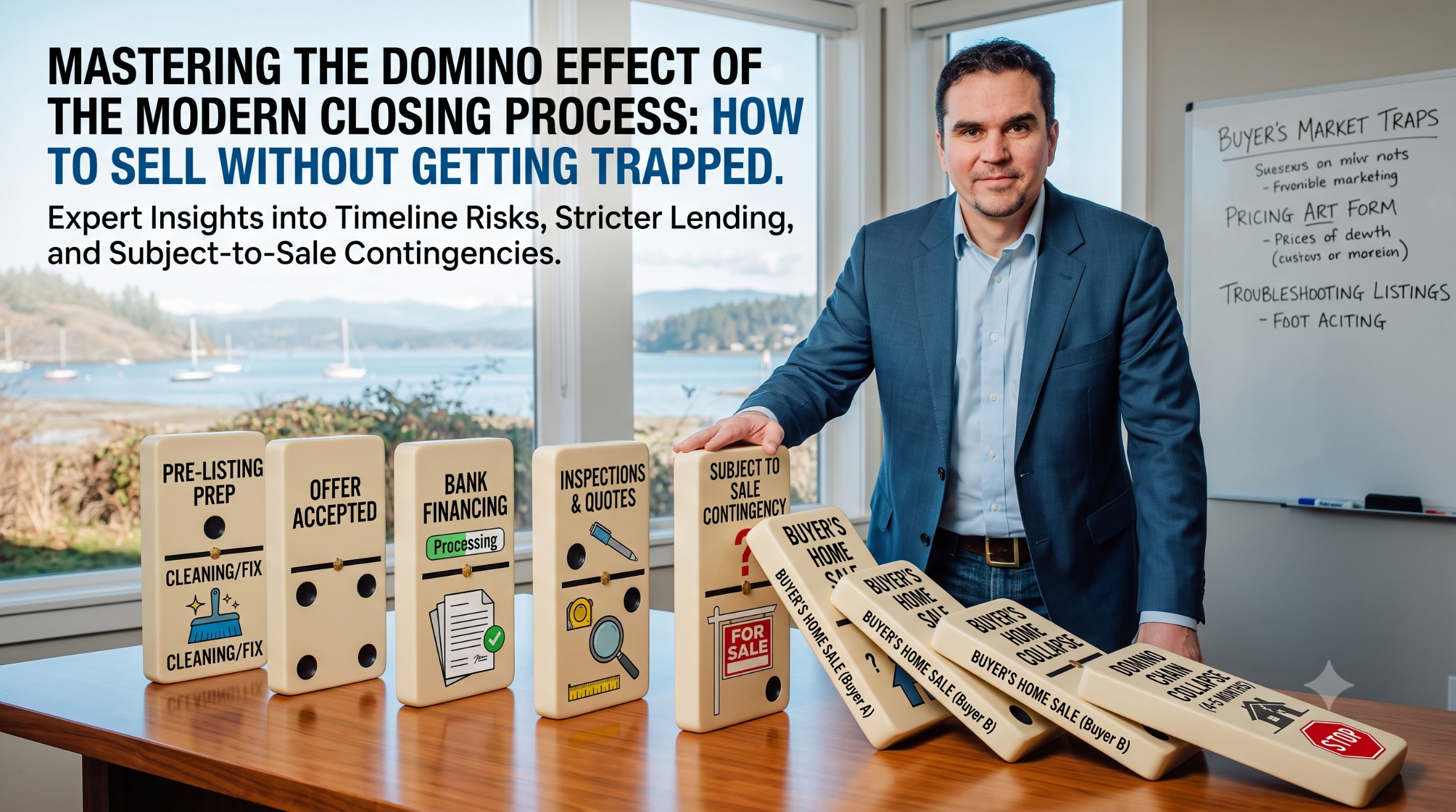
The Domino Effect of the Modern Closing Process
Once you finally accept an offer, many sellers assume they are at the finish line. However, the closing process in today's environment requires a realistic, conservative budget of time.
While a standard closing process traditionally takes two to three months, today’s market demands that you prepare for four to five months. There are two distinct reasons for this slowdown:
Stricter Institutional Lending
Banks and financial institutions have become significantly more demanding. They are slower at processing paperwork, they require highly detailed appraisals, and underwriters are asking for more historical information before clearing a loan. These financing delays, combined with the time it takes to get contractor quotes during the inspection objection phase, naturally stretch out the timeline.
The Rise of Contingent Offers
The biggest timeline disruptor right now is the "subject to sale" condition. Because the market has slowed down, a massive portion of active buyers cannot finalize the purchase of your home until they sell their existing property.
This creates a high-stakes domino effect. If your buyer fails to sell their home on time, your deal collapses. So far this year alone, I have had five written and accepted offers completely fall apart and collapse because the buyers could not sell their own properties in time. When a chain of multiple buyers all need to sell their respective homes to fund the next purchase, a single delay triggers a cascade that affects everyone involved. What Should I Expect From My Agent?
Setting Your Expectations for Success
Selling a home efficiently in today's real estate climate requires shedding outdated assumptions. You cannot control the broader market conditions or the speed of commercial banks, but you can control your own preparation and pricing strategy.
By handling repairs before the cameras arrive, pricing accurately for the current inventory, and budgeting a realistic four to five months for the closing dominoes to fall, you can navigate the timeline with confidence and avoid the traps that leave listings sitting in the dark.
If you’re looking for an agent that will get the job done, I’d be happy to help: https://www.romankrzaczek.ca/

Comments:
Post Your Comment: